Alloy wheels are one of the most visible features on any vehicle. They sharpen the overall look of your car, and keeping them in good condition protects both its appearance and its resale value. But everyday driving takes its toll. Kerb scrapes, potholes, corrosion and brake dust can leave even premium alloys looking tired.
If your wheels are showing their age, you are probably asking two questions: how to refurbish alloy wheels, and how much to refurbish alloy wheels. This guide answers both, so you know exactly what the process involves, what you should expect to pay, and when it is worth calling in the professionals at Alloy Fix.
What is Alloy Refurbishment?
Alloy refurbishment is the process of repairing, restoring and refinishing damaged or worn alloy wheels. Unlike a quick cosmetic touch-up, professional refurbishment addresses structural damage as well as appearance: correcting bends, repairing cracks, removing corrosion and restoring the finish to showroom quality.
A professional workshop combines alloy welding, straightening, sanding, polishing and coating using industry-standard equipment. That level of care ensures repaired wheels meet safety standards while looking as good as the day they left the factory.
Common Types of Alloy Wheel Damage
Knowing what kind of damage you are dealing with helps you understand what your refurbishment will involve and what it is likely to cost:
- Kerb damage: The most frequent problem. Even minor scrapes expose bare metal, which corrodes quickly if left untreated.
- Bends and warping: Potholes and road debris can bend alloys, causing vibration and uneven tyre wear.
- Cracks and fractures: Severe impacts can crack the alloy itself. Cracks worsen over time and should always be repaired professionally.
- Corrosion and oxidation: Road salt, water and chemicals eat away at the finish and, eventually, the metal beneath.
- Faded or worn finish: Sun exposure and brake dust dull the lacquer, leaving wheels looking flat and lifeless.
How to Refurbish Alloy Wheels: The Step-by-Step Process
Wondering how to refurbish alloy wheels properly? Whether it is a single kerbed wheel or a full set, professional refurbishment follows the same core steps:
- Initial inspection. Each wheel is examined for cracks, bends, corrosion and finish wear. This stage determines whether a wheel is safe to refurbish and which repairs it needs.
- Tyre removal and stripping. The tyre is removed and the wheel is chemically stripped and cleaned, taking it back to bare alloy so nothing is hidden under old paint.
- Structural repairs. Cracks are welded and bent wheels are straightened on specialist machinery, restoring the wheel’s structural integrity.
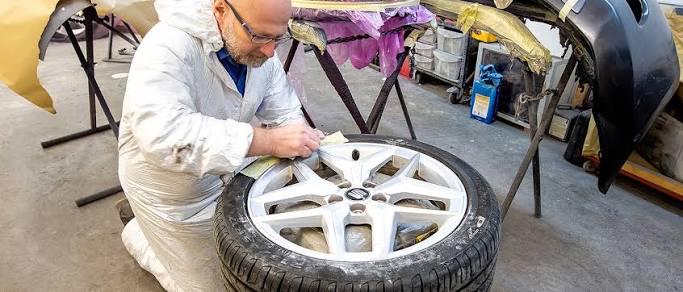
- Surface preparation. The wheel is sanded and keyed to create a smooth, even base for the new finish.
- Refinishing. A fresh coat of paint, powder coating or lacquer is applied, matched to the original colour or a custom finish of your choice. Diamond cut wheels are re-cut on a lathe to restore that distinctive machined face.
- Final quality check. Every wheel is inspected and balanced before the tyre is refitted, ensuring it is safe, true and flawless.
Can You Refurbish Alloy Wheels Yourself?
DIY kits exist, and for a small paint chip on a standard painted wheel they can tide you over. But there are real limits. Home repairs cannot fix bends or cracks, colour matching is notoriously difficult, and rattle-can lacquer rarely survives brake heat and pressure washing. Diamond cut wheels cannot be refurbished at home at all, as they require lathe machining.
If the damage is anything more than surface-deep, or if you want a finish that lasts, professional refurbishment is the safer and usually the cheaper option in the long run. A botched DIY job often costs more to put right than a professional repair would have cost in the first place.
How Much to Refurbish Alloy Wheels?
The question every driver asks: how much to refurbish alloy wheels? The honest answer is that it depends on the size of the wheel, the type of finish and the extent of the damage. As a general guide in the UK:
- Standard painted or powder coated refurbishment typically costs somewhere between £50 and £120 per wheel.
- Diamond cut refurbishment usually costs more, as it involves precision lathe re-cutting as well as refinishing.
- Structural repairs such as crack welding or straightening are priced on top, depending on severity.
- Full sets are often better value than individual wheels. Alloy Fix, for example, offers up to 30% off when you refurbish a full set.
Compare that with the cost of replacement. A single new OEM alloy can easily run into several hundred pounds, and matching one new wheel to three worn ones never looks right. Refurbishment restores the whole set for a fraction of the price.
For an accurate figure on your specific wheels, the quickest route is to contact Alloy Fix for a free, no-obligation quote. Their team will assess the damage and confirm the exact cost before any work begins.
Why Choose Professional Refurbishment?
Opting for professional alloy refurbishment rather than replacement offers several advantages:
- Cost-effective: Repairing wheels is far less expensive than buying new ones.
- Improved safety: Structural repairs are carried out to strict standards, reducing the risk of failure on the road.
- Enhanced aesthetics: A refreshed finish restores your vehicle’s premium look and protects resale value.
- Environmentally friendly: Refurbishing rather than replacing keeps alloys out of landfill.
Why Alloy Fix?
If you are searching for alloy refurbishment you can trust, Alloy Fix ticks every box:
- Proven reputation: Over 800 five-star Google reviews from satisfied customers.
- Full range of services: Kerb damage, corrosion, cracks, buckles and full colour changes, plus specialist diamond cut refurbishment on an in-house lathe.
- Guaranteed workmanship: Every refurbishment comes with a 3 year warranty as standard.
- Fast turnaround: Expert repairs completed quickly, so you are not off the road for long.
- Three convenient locations: Romford, Dartford and Hemel Hempstead, covering Essex, Kent and Hertfordshire.
Tips for Maintaining Refurbished Wheels
Once your wheels are refurbished, a little care keeps them looking new:
- Clean regularly with a gentle, non-abrasive wheel cleaner to remove brake dust before it bakes on.
- Avoid harsh chemicals and acid-based cleaners that strip lacquer.
- Drive carefully around potholes and kerbs to prevent fresh damage.
- Protect seasonally with a wheel sealant or ceramic coating, especially before winter road salt arrives.
The Bottom Line
Now you know how to refurbish alloy wheels and how much to refurbish alloy wheels, the decision is straightforward. Damaged alloys only get worse with time, and the longer you leave them, the more the repair costs. Professional refurbishment restores safety, appearance and value at a fraction of the cost of replacement.
Ready to give your wheels a new lease of life? Get in touch with Alloy Fix today for your free quote, or visit their Romford, Dartford or Hemel Hempstead workshop and let the experts restore your alloys to perfection.