At a Glance:
- Heavy haulage companies analyse load size and weight to choose roads, bridges, and intersections that can safely support oversized transport.
- They secure permits, approvals, and compliance requirements that determine when and how transport can move.
- They conduct risk assessments and prepare contingencies to keep movements safe and efficient.
Efficient route planning is crucial for every heavy haulage movement to save time, control costs, and lower operational risks. To achieve this, route planning and design should consider infrastructure, safety, efficiency, and schedule.
However, planning a heavy haulage route is not always straightforward. Road height and width constraints, bridge load limits, traffic conditions, and strict road regulations influence route feasibility. Heavy haulage companies evaluate all these challenges to plan a route with precision to support both the load and the transport route.
This article explains how freight transport specialists address transport challenges and ensure your project is safe, compliant, and efficient.
Load Requirements and Route Constraints
Planning routes for oversized loads relies on precise weight and dimensional information. These factors determine which routes are suitable and which need to be excluded due to height clearances, bridge weight limits, tight turns, or restricted intersections. Even a slight miscalculation in dimension and weight can result in selecting unsafe routes or last-minute delays.
Heavy haulage companies use accurate dimensional data to plan the most efficient routes by taking into account overmass transport restrictions, regulated travel windows, reduced speed limits, and escort vehicle requirements.
Digital Route Modelling and Path Selection
Modern heavy vehicle route planning involves GIS mapping, route-modelling software, and satellite imagery. They help evaluate gradients, pavement condition, bridge capacity, and clearance risks along the proposed route. In addition, these tools enable freight-moving teams to identify potential obstacles early and improve the overall alignment.
Planners also consider multiple route options, congestion risks, and prepare backups for sudden disruptions. This digital method ensures the chosen route remains efficient and robust when conditions change unexpectedly.
Permits, Regulations, and Compliance
Oversize and Overmass (OSOM) movements require specific permits based on jurisdictions, load class, and infrastructure sensitivity. In addition, multiple transport authorities may be involved depending on the load dimensions, travel timing, and cross-border transport requirements.
Haulage providers communicate with state regulators, councils, and road authorities to secure all necessary permits and ensure full compliance with OSOM rules. Their knowledge of statutory requirements and application procedures helps obtain approvals efficiently. That way, the risks of delays, penalties, or non-compliance during transport are minimised.
Stakeholder and Traffic Coordination
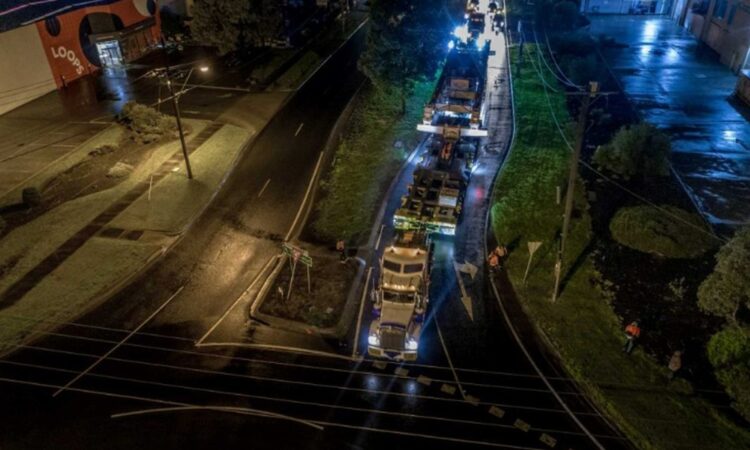
Efficient route planning requires access approvals, utility checks, and traffic-management measures before the movement begins. Heavy haulage companies communicate with councils, utility providers, police escorts, and transport departments to lower the risks of unexpected halts or delays.
They also account for roadworks, peak-hour congestion, weather events, and scheduled community activities. This integrated approach ensures smooth and consistent movement from start to finish.
Risk Assessment and Contingency Planning
Before any route is approved, haulage service providers carry out thorough transport risk assessments. They assess steep slopes, narrow bridges, soft shoulders, complex intersections, and areas exposed to weather. Each risk influences how the route is planned and which safety measures are needed to keep the movement safe.
Contingency planning also ensures operations remain resilient during disruptions. Mitigation measures include adjusting travel times, setting lower speeds, planning safe pull-over areas, and keeping alternative routes ready. These strategies help maintain progress even when disruptions occur during transport.
Efficient heavy haulage route planning relies on a combination of expertise, careful assessment, digital tools, regulatory compliance, and risk management strategies to ensure safe and smooth transport. Together, these elements enable haulage companies to identify and implement practical routes. Each planning step reduces uncertainty, minimises delays, and ensures reliable movement for oversized and overmass transport.
If you need safer, more efficient haulage for your oversized loads, working with a trusted heavy-haulage company ensures expert route planning tailored to your project’s requirements.