

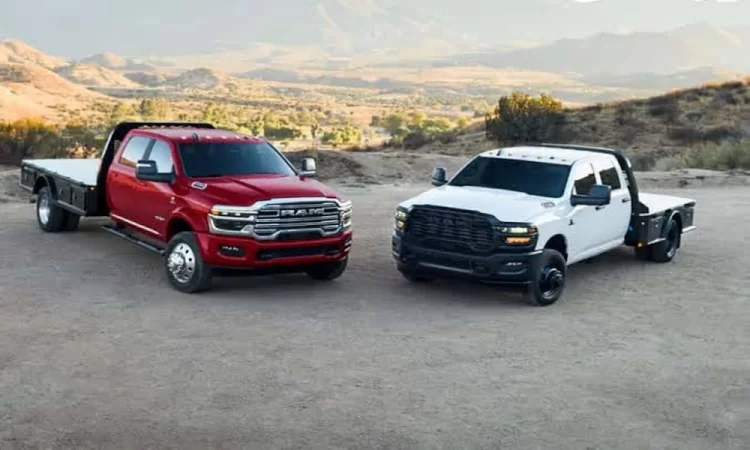

With a full-sized pickup truck, one has to consider factors such as engine capacity, basic towing capability, carrying capacity, and interior volume of the vehicle. There are six different engines, three cab versions, and a maximum towing capacity of 13,500 lbs for the 2026 Ford F-150 model. In order to choose the one that will fit you better, one has to take into account the truck usage, cargo carrying capacity, gross weight capacity, and bed capacity.
The most common misconception about purchasing a big truck is associated with considering only the towing capacity and forgetting about the actual weight that is placed on the hitch and in the passenger cabin. Many companies tend to advertise their trucks focusing on such parameters as towing capacity. However, such factors as GCWR or rear axle capacity should be considered. These numbers keep you safe each day, even before you reach the full weight limit.
If you want to shop for a new Ford F-150 in Houston, you should check how well it keeps cool in high heat, look at how close the bumper is to the axle, and see the real payload rating for the back. A bit of checking now can help you not feel bad about your buy later on.
What Engine Options Are Available?
Modern full-size trucks come with many different engine choices. You can get V6 engines with turbos that help save on gas. There are also hybrids that give a lot of power and V8 engines. Some V8s do not use a turbo. Ford’s 2026 F-150 trucks give you six different engines to pick from. Each one is made either for heavy loads, pulling trailers, or to use every day.
| Engine | Horsepower / Torque | Max Towing / Payload |
|---|---|---|
| 2.7L EcoBoost V6 | 325 hp / 400 lb-ft | 8,400 lbs / 1,775 lbs |
| 5.0L Ti-VCT V8 | 400 hp / 410 lb-ft | 12,800 lbs / 2,235 lbs |
| 3.5L EcoBoost V6 | 382 hp / 500 lb-ft | 13,500 lbs / 2,440 lbs |
| 3.5L PowerBoost Hybrid | 420 hp / 578 lb-ft | 11,600 lbs / 1,740 lbs |
The 2.7L EcoBoost V6 is a good starting choice if you need a truck for light work. The 5.0L V8 gives you smooth power each time you step on the pedal and can pull up to 12,800 pounds. The twin-turbo 3.5L EcoBoost V6 lets you tow as much as 13,500 pounds, which is the most you can get here. The 3.5L PowerBoost Hybrid mixes twin turbos with an electric motor to give you 578 lb-ft of power and works as a generator if you need extra energy.
- 2.7L EcoBoost: Best if you drive to work and use your truck for light work.
- 5.0L V8: Good for a big load and if you want that classic V8 feel.
- 3.5L EcoBoost: Great if you pull heavy trailers and want the most power for towing.
- 3.5L PowerBoost: Gives you power to run AC at the work site and strong pull.
Understanding Real-World Towing Ratings
Conventional towing capacity shows how much a trailer can weigh. But what you can really do also depends on the payload limit. All the weight from the trailer, the hitch tongue, people, and cargo goes right on the rear axle.
Tongue weight is about 10% to 15% of a trailer’s weight. This is what the Society of Automotive Engineers (SAE J2807 towing standard) says. A 10,000-pound trailer can put up to 1,500 pounds of tongue weight onto the receiver hitch. When you take away 1,500 pounds from the truck’s total payload of 1,740 pounds, you are left with just 240 pounds for people and things inside the truck.
- Calculate tongue weight: Weigh your packed trailer to make sure the tongue weight is 10% to 15% of the total weight of the trailer.
- Verify hitch classification: Ensure that the hitch you have will be suitable for the loaded trailer’s total weight rating.
- Use weight distribution: Install a system that allows for weight distribution and sway control on all trailers exceeding 5,000 pounds.
- Set brake controllers: Calibrate the level of the electric trailer brake on your dashboard prior to entering traffic.
Cab Styles to Consider for Full-size Truck
There are three cab styles available for full-size trucks. You have a choice between more passenger area or more bed area, depending on your preferences.
- Regular Cab: Two doors plus a single bench seat. You can get it with a 6.5-foot or 8-foot bed. This one is good for a work team.
- SuperCab: This model has four doors, and the rear ones open from the rear. There is 33.5 inches of room for legs in the back seat. The bed is 6.5 feet long.
- SuperCrew: You get four full-sized doors here. Rear legroom is 43.6 inches. The bed can be 5.5 or 6.5 feet, so people in the cab feel most comfortable.
Frequently Asked Questions
Which Ford F-150 engine offers the highest towing capacity?
The 3.5L EcoBoost V6 can tow up to 13,500 pounds if you have all the right parts for it.
What is the difference between payload and towing capacity?
Payload shows the weight you put right on the frame of the vehicle. Towing is about the weight you pull behind using the hitch.
What are the benefits of Pro Power Onboard?
Pro Power Onboard can change hybrid powertrain output and give you up to 7.2 kW of AC generator power. You can use this power for site tools.
Finding Your Ideal Full-Size Truck Setup
Selecting the appropriate pickup requires considering the horsepower of the engine, the capacity of the pickup, and the space required in the cab by you and your cargo. There is a need to match your towing needs with the carrying capacity of the truck. This will enhance the safety of driving and increase the longevity of the vehicle. When you want to see what chassis features and cabin setups fit you, go for a test drive to shop for a new Ford F-150 in Houston.