Servicing feels like paying for nothing. The car worked before it went in and works afterwards, and the invoice records fluids and filters rather than anything visible. The value only becomes obvious in the failures that do not happen, which makes it easy to defer. Regular Car Servicing is essentially buying down the probability of an expensive failure, and in Singapore’s conditions those probabilities move faster than most owners assume.
Oil Is the Item That Matters Most
Engine oil lubricates, cools, cleans and seals, and it degrades with heat and time. Once its additive package is depleted, wear accelerates in bearings and on cylinder walls, and deposits begin forming in oil galleries and turbocharger feeds. None of this announces itself. By the time an engine sounds different, the damage has been accumulating for months. Changing oil and the filter at the specified interval is the single highest-return maintenance action available on any vehicle.
Why Local Conditions Shorten Intervals
Manufacturer intervals assume typical driving. Singapore driving is closer to the severe-service definition in most handbooks: short journeys where the engine barely reaches operating temperature, heavy stop-start traffic, sustained idling in queues and carparks, high ambient temperature and constant humidity. Under these conditions oil degrades faster, and many workshops recommend servicing at shorter intervals than the handbook’s optimistic figure. Ask your workshop what they recommend for your actual usage pattern rather than applying the number for open-road mileage.
What a Service Should Include
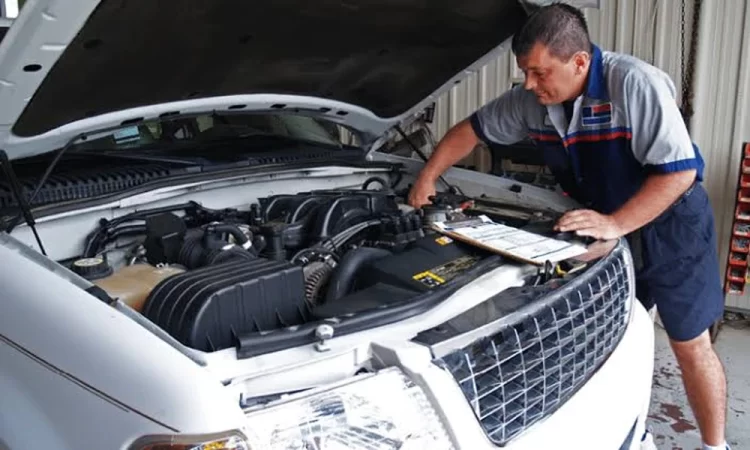
A basic service covers engine oil and filter. A fuller service adds air filter, cabin filter, spark plugs where due, and inspection of brakes, tyres, suspension components, drive belts, hoses, battery condition and all fluid levels. The inspection is frequently more valuable than the parts replaced, because it catches a perished hose or a brake pad at two millimetres before either becomes a roadside event. Ask for the inspection findings in writing rather than a verbal all clear.
Fluids Beyond Engine Oil
Brake fluid absorbs moisture from the air over time, which lowers its boiling point and can produce a soft pedal under heavy braking. Coolant loses its corrosion inhibitors and eventually attacks the components it was protecting. Transmission fluid degrades under heat, and in stop-start traffic it works hard. Power steering and differential fluids have their own intervals. These are not upsells; they are scheduled items that owners defer because nothing appears to be wrong, which is precisely the point.
Brakes, Tyres and the Things You Can Check
Between services, a few checks take five minutes. Tyre pressures monthly, since underinflation increases wear, fuel consumption and heat build-up. Tread depth, checked across the width rather than at one point, because uneven wear indicates alignment or suspension issues. Oil level on the dipstick. Coolant level in the expansion tank when cold. Any new noise, vibration or smell. Owners who do this catch most developing problems early and arrive at the workshop with useful information.
Servicing and the Inspection Cycle
Vehicles in Singapore are subject to periodic inspection once they reach a certain age, and the requirement becomes more frequent as the car gets older. A vehicle maintained on schedule generally passes without drama; one neglected for two years fails on items that were cheap to fix a year earlier. Booking a service ahead of an inspection is sensible, and any workshop offering car servicing in Singapore will check the common failure points as part of it.
Records Have Resale Value
A complete service history is worth real money when the vehicle is sold or traded, because it is the only evidence a buyer has that the car was maintained rather than merely driven. Keep every invoice, note the mileage at each service, and retain records of major work. For vehicles still within a manufacturer warranty, servicing at the specified intervals with the correct specification parts is usually a condition of that warranty remaining valid.
The Items With Their Own Clocks
Some components are replaced on their own schedule rather than at every service, and they are the ones that cause disproportionate damage when missed. A timing belt, where fitted, has a defined life in both kilometres and years, and a belt that snaps on an interference engine will bend valves and turn a routine job into an overhaul. The water pump is usually replaced at the same time because the labour overlaps almost completely. Spark plugs, the fuel filter and, on diesels, additional filtration all have intervals. Ask your workshop to note the next due date for each on the invoice so none of them quietly slips.
Authorised Workshop or Independent
Both are legitimate. Authorised workshops have model-specific diagnostic equipment, technical bulletins and factory training, which matters for complex electronic faults and while a warranty applies. Established independent workshops generally cost less and can be more flexible, and using one does not automatically void a warranty provided servicing follows the schedule and uses parts of the required specification. The deciding factors are usually the complexity of your vehicle and whether it is still under cover.
Making It Routine
Set a reminder based on both mileage and time, since a car driven very little still needs oil changed on a calendar basis. Book before the interval rather than after it. Keep the records together. Report symptoms as they appear rather than saving them for the next visit. Treated as a routine rather than a response, Car Servicing costs a predictable amount each year and removes most of the unpredictable amounts entirely.