

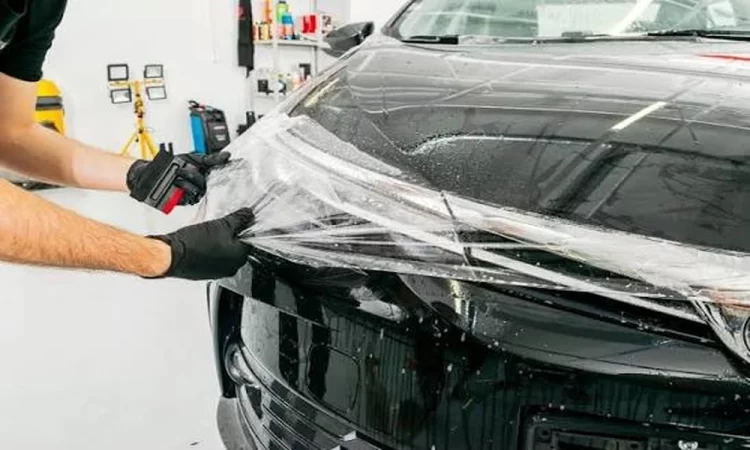
You just drove off the lot in a brand-new car. The paint is flawless. The finish is deep. And then – somewhere on the highway – a pebble kicks up and leaves a chip the size of a pencil eraser right on the hood. If that scenario makes your stomach drop, a clear bra might be the best investment you make this year.
But it’s not a perfect solution for everyone. Before you book an appointment, here’s a grounded look at what clear bra (also called Paint Protection Film or PPF) actually does, what it can’t do, and whether the cost makes sense for your situation. You can also read a full breakdown of the pros and cons of installing clear bra on new cars directly from a professional detailing perspective.
What Is Clear Bra, Exactly?
Clear bra is a thermoplastic urethane (TPU) film applied directly to painted surfaces. It was originally developed for military helicopters to protect rotor blades from debris during combat. The automotive version arrived in the 1990s and has been refined significantly since – modern films are optically clear, self-healing, and built to last years without yellowing or peeling.
It’s not the same as ceramic coating. Ceramic coating bonds chemically to the paint surface and adds hydrophobic properties. Clear bra is a physical film – a thin but tough shield that absorbs impacts before they reach the paint.
Quick Overview: Pros vs. Cons at a Glance
| Factor | Pro | Con |
|---|---|---|
| Paint Protection | Shields against chips, scratches, road debris | Does not protect against deep dents or dings |
| Self-Healing | Minor swirl marks disappear with heat | Deep scratches may still require film replacement |
| Longevity | Quality films last 7-10 years | Needs replacement eventually – adds future cost |
| Appearance | Virtually invisible when professionally installed | DIY installs can bubble or show edges |
| Resale Value | Protects original paint, boosting trade-in value | Some buyers prefer to inspect original paint |
| Cost | One-time investment vs. repeated paint correction | Upfront cost $1,000-$7,000+ depending on coverage |
| Maintenance | Easy to clean, wax-compatible | Requires care around edges to avoid lifting |
The Pros – What Clear Bra Actually Delivers
Real Protection Against the Most Common Paint Damage
Road debris is the number one cause of paint damage on new cars. Gravel, sand, salt, small rocks – they all hit at highway speed and chip paint before you even notice. Clear bra absorbs that impact. The film itself may get nicked, but the factory paint underneath stays untouched. For anyone who drives regularly on highways or gravel roads, this is the single most compelling reason to install it.
Self-Healing Technology Is Genuinely Impressive
This is the feature that surprises people most. Premium films use a top coat that responds to heat – whether from sunlight or warm water. Light surface scratches and swirl marks literally disappear as the film relaxes back to its original shape. It’s not magic, and it doesn’t fix deep cuts, but it does mean the film stays looking newer for longer without constant polishing.
It Preserves Resale Value
A car with original, undamaged paint commands a noticeably higher trade-in and private sale price than one with chips, touch-up paint, and swirl marks. Clear bra essentially freezes your paint in its new-car condition. Over a 3-5 year ownership period, the film often pays for itself in preserved resale value alone – especially on luxury or exotic vehicles.
Coverage Can Be Customized
You don’t have to wrap the entire car. Most owners start with the most vulnerable areas: the hood (full or partial), front bumper, fenders, side mirrors, and rocker panels. A partial front-end wrap typically costs $900-$1,500 and covers the zones most likely to take damage. Full-body wraps offer comprehensive protection but cost significantly more.
Works Well Under Ceramic Coatings
Clear bra and ceramic coating are not competitors – they work best together. Apply PPF first to protect against physical impacts, then layer a ceramic coating on top for hydrophobic properties and gloss enhancement. The combination is considered the gold standard in paint protection by most professional detailers.
The Cons – What Clear Bra Can’t Do (And What to Watch For)
The Upfront Cost Is Significant
A full-vehicle PPF installation from a reputable shop can run $3,000-$7,000 or more depending on the vehicle, the film brand, and your location. Even a partial front-end install on a midsize sedan can approach $1,200-$1,800. If you’re driving a Honda Civic and plan to sell in two years, the math may not work in your favor.
Quality of Installation Varies Enormously
PPF is only as good as the installer. A poorly cut or applied film will bubble, show obvious edges, or lift at the corners within months. The film itself is not the variable – the skill of the person applying it is. Always ask to see an installer’s portfolio, and specifically ask how they handle complex curves like bumper corners and A-pillars.
It Is Not Invisible in Every Condition
In most lighting conditions, a well-installed clear bra is invisible. But in harsh raking light – like early morning or late afternoon sun – you may notice a very faint edge line where the film meets untreated paint. High-gloss black paint tends to show this most. Matte-finish films are available for vehicles with matte factory paint, but they are more expensive.
The Film Eventually Needs Replacement
Premium films like XPEL Ultimate, 3M Scotchgard Pro, and SunTek Ultra are rated for 7-10 years. After that, the film may yellow slightly, lose its self-healing properties, or begin to fail at the edges. Removal of an old film is typically straightforward, but it adds to the lifetime cost of ownership.
It Won’t Fix Existing Paint Issues
Clear bra protects going forward – it doesn’t correct what’s already there. If your paint already has swirl marks, oxidation, or chips, those will be visible under the film (and may actually be amplified). Any paint correction or touch-up work should be done before installation, not after.
Who Should Install Clear Bra – And Who Should Skip It
| Consider Clear Bra If… | You Might Skip It If… |
|---|---|
| You drive a new or luxury vehicle | Your car is older with existing paint damage |
| You frequently drive highway miles | You drive short, low-debris routes |
| You plan to keep the car 5+ years | You plan to sell or trade in within 2 years |
| Resale value matters to you | Budget is the primary concern |
| You want peace of mind about paint | You are fine with periodic paint correction instead |
How Much Does Clear Bra Cost? A Rough Guide
| Coverage Level | What’s Included | Estimated Cost |
|---|---|---|
| Partial Front | Hood (partial), front bumper, mirrors | $900 – $1,500 |
| Full Front | Full hood, full bumper, fenders, mirrors, A-pillars | $1,500 – $2,500 |
| Track Pack | All of above + rocker panels, door edges, trunk lip | $2,500 – $3,500 |
| Full Vehicle | Entire exterior painted surface | $4,000 – $7,500+ |
Final Verdict
Clear bra is one of the most effective ways to protect a new car’s paint – but it’s an investment, not a miracle solution. If you drive a vehicle you care about, plan to own it for several years, and regularly encounter road debris, the protection it offers is real and lasting.
If budget is tight or you’re driving an older vehicle with existing paint issues, your money is better spent on a professional detail and paint correction. Clear bra protects; it doesn’t restore.
Either way, go into the decision informed. The right installer and the right film make all the difference between a finish that looks factory-fresh for a decade and one that peels at the edges inside a year.
Authority Resource: Consumer Reports – Paint Protection Film Guide




[…] focuses on paint protection film (PPF), not regular automotive window […]