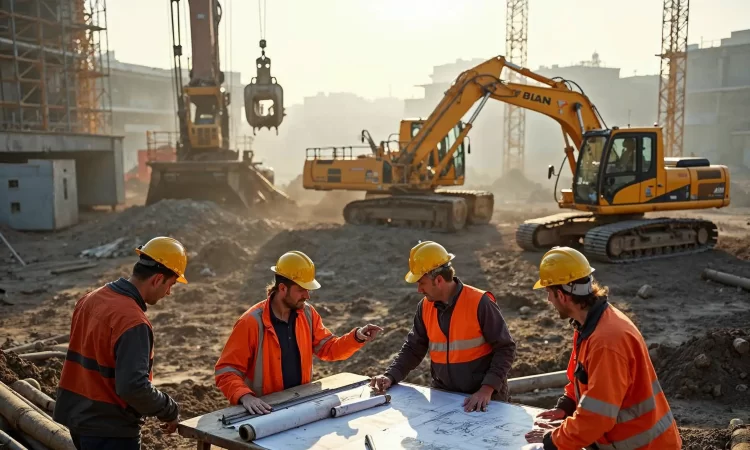
Large infrastructure and industrial projects are defined by scale, complexity, and tight coordination between multiple stakeholders. For project buyers responsible for equipment sourcing, decisions are not just about machinerythey directly affect timelines, budgets, and risk management. Among lifting solutions, truck-mounted cranes play a vital role in ensuring flexibility and speed across large project sites.
The Buyer’s Perspective: More Than Just Lifting Capacity
Unlike small contractors, large project buyers approach equipment procurement from a strategic standpoint. The focus extends beyond lifting capacity or boom length to include logistics, deployment speed, compliance, and lifecycle value. Truck-mounted cranes are often preferred because they combine mobility with lifting power, allowing rapid movement between multiple zones of a large project.
For buyers managing highways, power plants, ports, or industrial facilities, sourcing from a reliable truck cranes supplier becomes a strategic decision rather than a transactional one. Equipment reliability directly impacts contractor coordination and milestone delivery.
Mobility and Scalability Across Mega Projects
Large projects are rarely confined to a single work area. Materials, modules, and structures must be lifted across dispersed locations, sometimes within the same day. Truck-mounted cranes offer a clear advantage by eliminating the need for separate transport equipment. Their ability to move quickly on public and internal roads helps buyers reduce logistical bottlenecks.
Scalability is another critical factor. Large project buyers often require fleets of cranes with varying capacities to match different phases of construction. Standardized equipment sourced from a single supplier simplifies fleet management, operator training, and maintenance planning.
Risk Mitigation Through Supplier Capability
From a buyer’s standpoint, risk mitigation is central to procurement decisions. Delays caused by equipment failure or lack of service support can lead to cost overruns and contractual penalties. This is why supplier evaluation focuses heavily on after-sales support, spare parts availability, and technical expertise.
A dependable truck cranes supplier offers not only machines but also service agreements, operator guidance, and rapid response maintenance. These elements significantly reduce downtime risk, which is critical for projects operating under strict schedules and regulatory oversight.
Compliance, Safety, and Project Reputation
Large projectsespecially government-funded or multinational developments-operate under intense regulatory scrutiny. Equipment must meet safety, emission, and operational standards. Buyers are increasingly accountable for ensuring that all machinery on site aligns with compliance requirements.
Truck-mounted cranes equipped with modern safety systems, load monitoring technology, and operator-friendly controls contribute to safer worksites. For large project buyers, this translates into fewer incidents, stronger compliance records, and improved project reputation among stakeholders.
Long-Term Value and Procurement Efficiency
Procurement teams for large projects prioritize total cost of ownership rather than upfront pricing. Fuel efficiency, durability, maintenance intervals, and resale value all factor into purchasing decisions. A well-selected crane fleet can serve across multiple projects, spreading capital costs over several years.
Working with a single truck cranes supplier also streamlines procurement processes. Standardized contracts, predictable lead times, and consistent equipment specifications reduce administrative complexity and improve coordination between procurement, operations, and project management teams.
For large project buyers, truck-mounted cranes are not just lifting equipmentthey are enablers of efficiency, safety, and strategic control. Choosing the right machines and sourcing partner supports smoother execution across complex, multi-phase projects. In an environment where delays are costly and reputation matters, informed procurement decisions play a defining role in project success.